Borneo’s Call. Words and images by Jonathan Camí. Published in Lodestars Anthology
Words and images by Jonathan Camí. Published in Lodestars Anthology
Borneo’s Call
There’s an island that has always been under my skin. It’s strange how we can be connected to places we’ve never travelled to, the paths that eventually lead us there only revealing themselves at the journey’s end.
I loved comic books as a child and would often imagine myself fighting alongside Sandokan, the black-eyed pirate created by Emilio Salgari, or flying with Tintin on Flight No. 714 to Sydney. As I grew older, these fictional heroes were replaced by real people I admired. Sir David Attenborough taught me about wildlife conservation, while the late chef Anthony Bourdain introduced me to faraway cultures and cuisines. Later still, when I was living in Barcelona, I found myself in a tattoo parlour half hidden along a dark and humid street, and committed one of the many sins of my youth. I covered my arm, from my shoulder to the back of my hand, with an ink dragon.
What links Sandokan, David Attenborough and a tattoo? What do Tintin and Bourdain have in common? I found the answer in Borneo, an island in the Malay Archipelago, which is shared by Malaysia, Indonesia and Brunei. I’d come to the northern state of Sarawak in search of orangutans, unaware of just how long the world’s third largest island had been calling to me.
I landed in Kuching on the Malaysian side of Borneo. This small, liveable city is split in two by the Sarawak River. On the north side, the hilltop Fort Margherita towers over the old town, and I was standing atop one of the garrison’s white walls (built to protect the city from pirates) when I had my first revelation. Paintings in the fort’s museum portray the White Rajah of Sarawak, the hereditary monarchy established in 1841 by the Brooke family, who erected the fortress. It turns out that one of Sandokan’s storylines involved him fighting the great injustice of the White Rajah reign, which was ultimately abolished here in 1946.
The best way to cross the river to the city’s south side is by waving a hand at any of the passing covered boats that offer a ferry service. Maybe it was the heat and humidity so close to the equator, but once aboard, I felt myself nodding off, lulled by the river, until the domed floating mosque known as the Masjid India Kuching came into view and my camera started clicking.
The south shore has the best-preserved Colonial building in Sarawak, The Old Courthouse, which now serves as the local agora, hosting exhibitions and festivals; and perusing a brochure from the visitor’s office here, another piece of the puzzle fell into place. The nearby Bako National Park is home to long-nosed proboscis monkeys, which have been my favourite primates since reading a story in which Tintin encountered them after landing a hijacked airplane.
Hunger later led me to the Choon Hui Cafe, where I enjoyed what Bourdain called the “breakfast of the Gods”. The Sarawak laksa he raved about is a succulent noodle soup cooked with chicken and prawn stock. It’s the national dish, enjoyed any time of the day, and I left the friendly bistro filled to the brim and vowing to return.
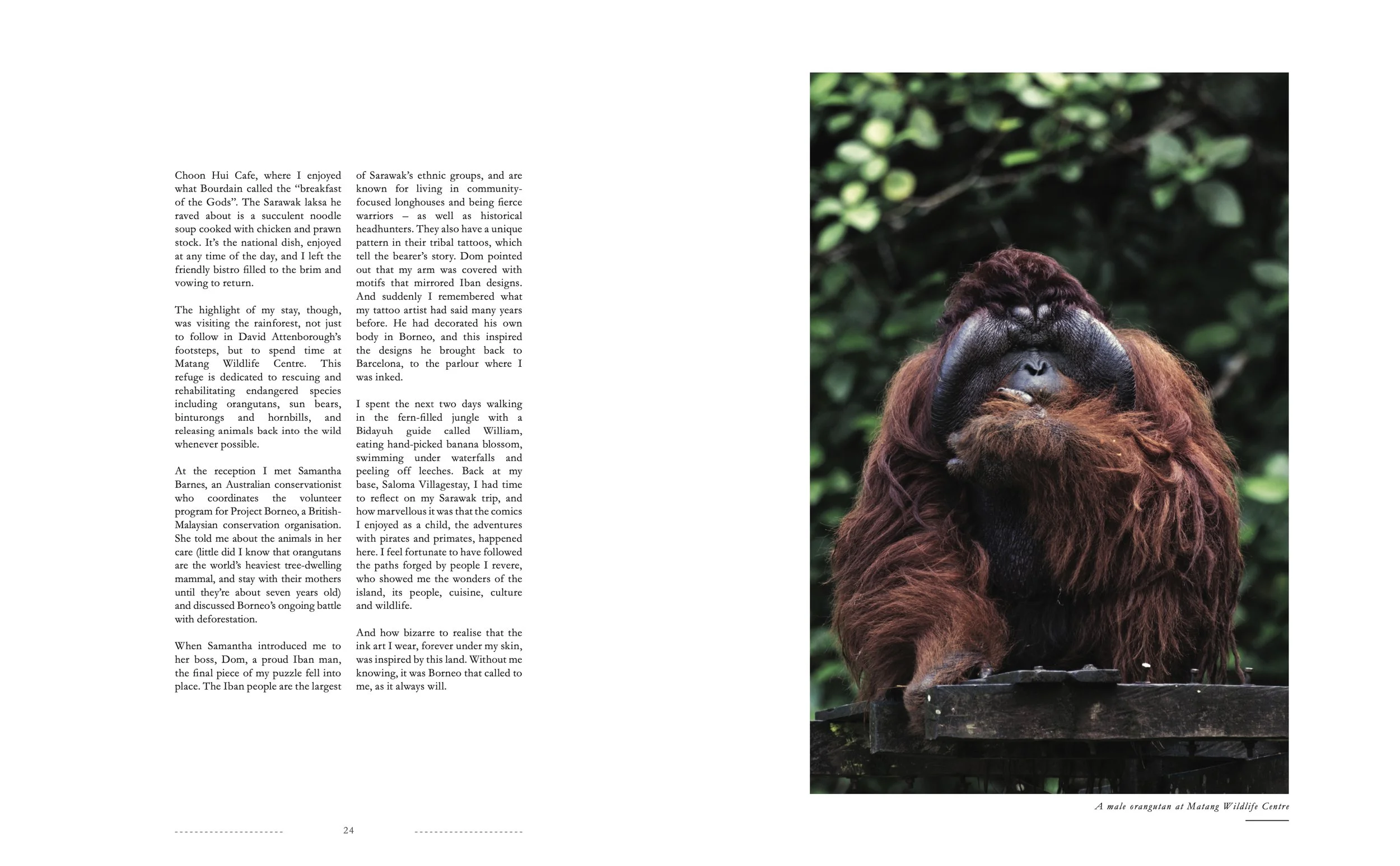
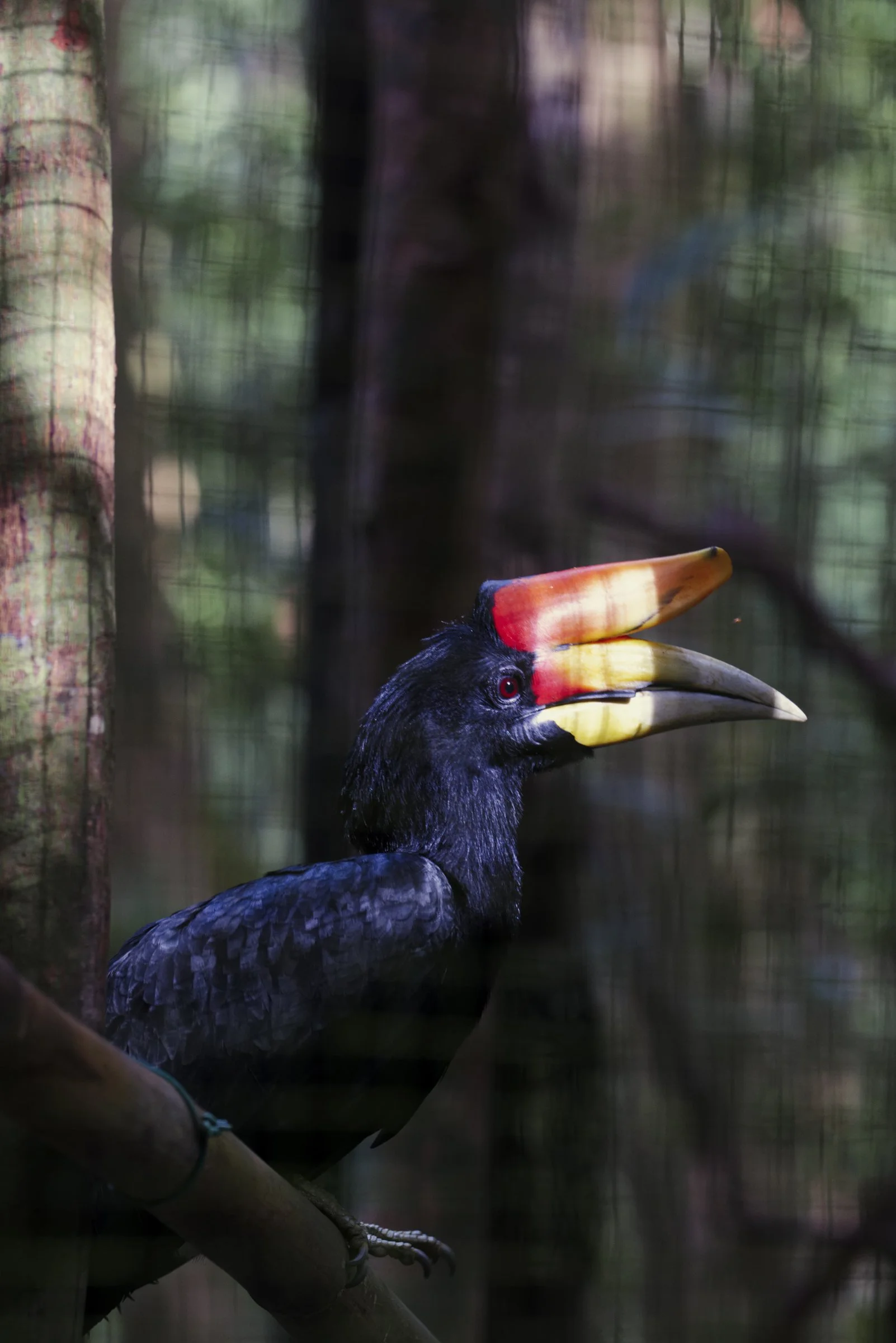
The highlight of my stay, though, was visiting the rainforest, not just to follow in David Attenborough’s footsteps, but to spend time at Matang Wildlife Centre. This refuge is dedicated to rescuing and rehabilitating endangered species including orangutans, sun bears, binturongs and hornbills, and releasing animals back into the wild whenever possible.
At the reception I met Samantha Barnes, an Australian conservationist who coordinates the volunteer program for Project Borneo, a British-Malaysian conservation organisation. She tells me about the animals in her care (little did I know that orangutans are the world’s heaviest tree-dwelling mammal, and stay with their mothers until they’re about seven years old) and discusses Borneo’s ongoing battle with deforestation.
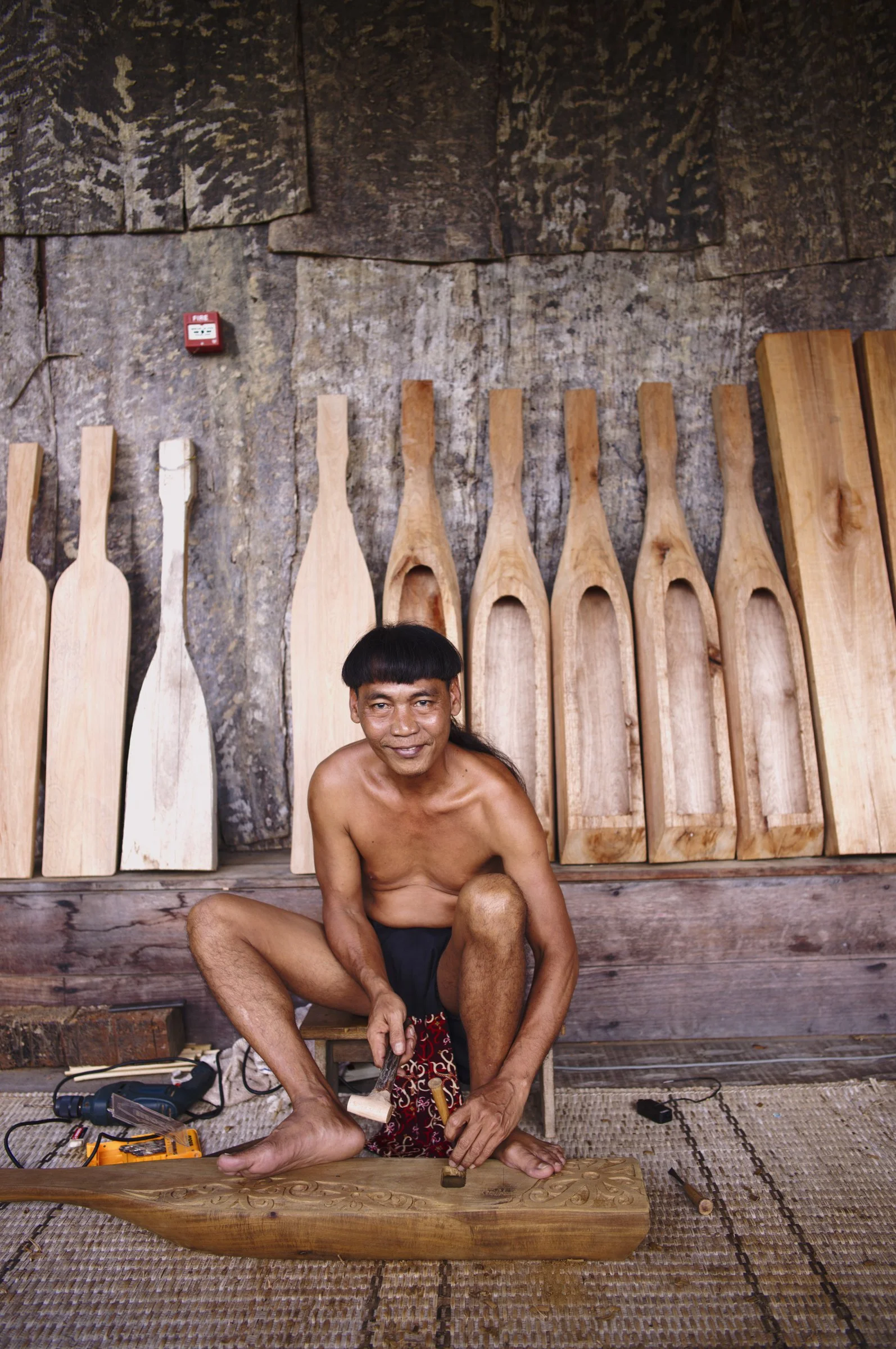
When Samantha introduces me to her boss, Dom, a proud Iban man, the final piece of my puzzle falls into place. The Iban people are the largest of Sarawak's ethnic groups, and are known for living in community-focused longhouses and being fierce warriors – as well as historical headhunters. They also have a unique pattern in their tribal tattoos, which tell the bearer’s story. Dom pointed out that my arm was covered with motifs that mirrored Iban designs. And suddenly I remembered what my tattoo artist had said many years before. He had decorated his own body in Borneo, and this inspired the designs he brought back to Barcelona, to the parlour where I was inked.
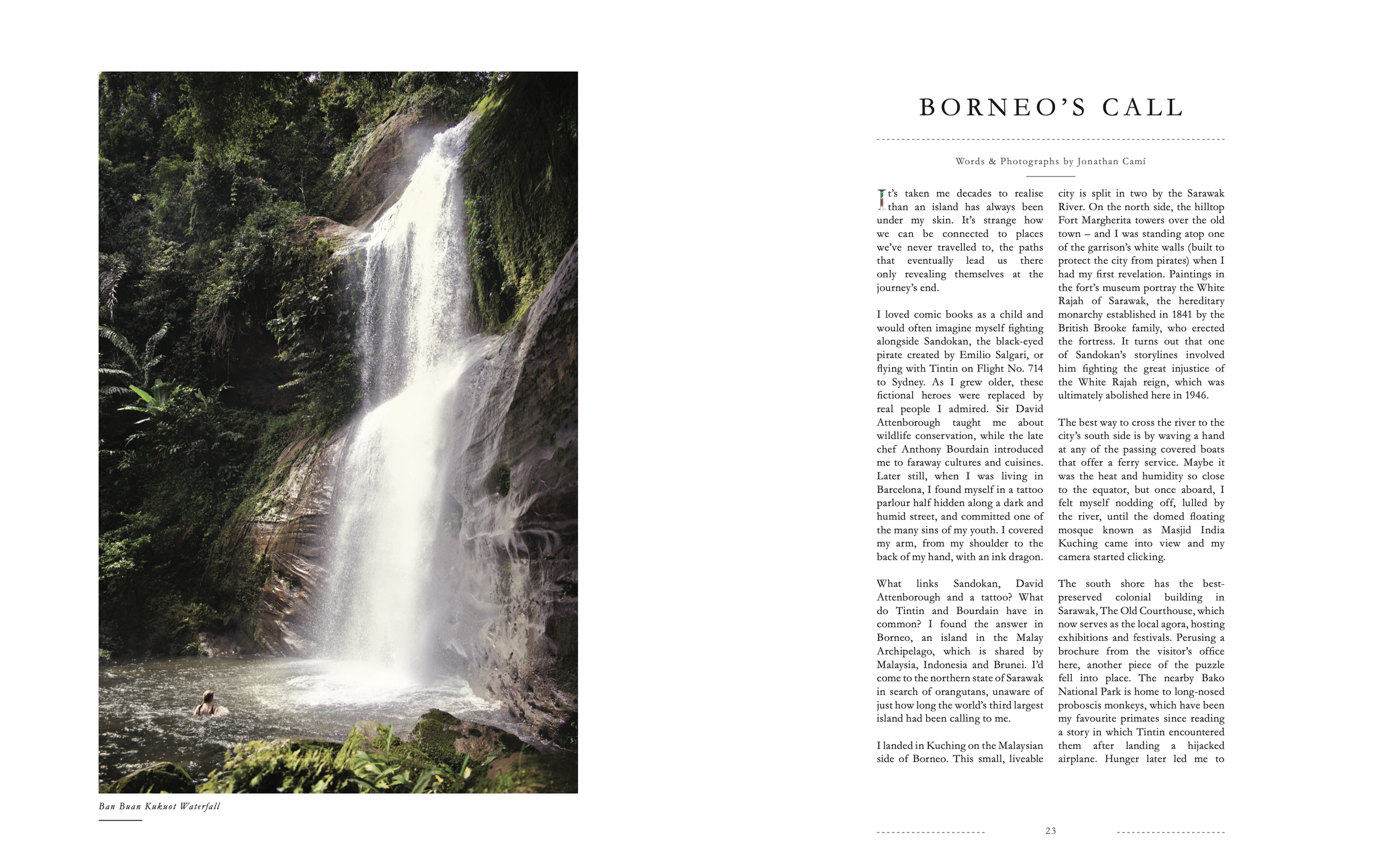
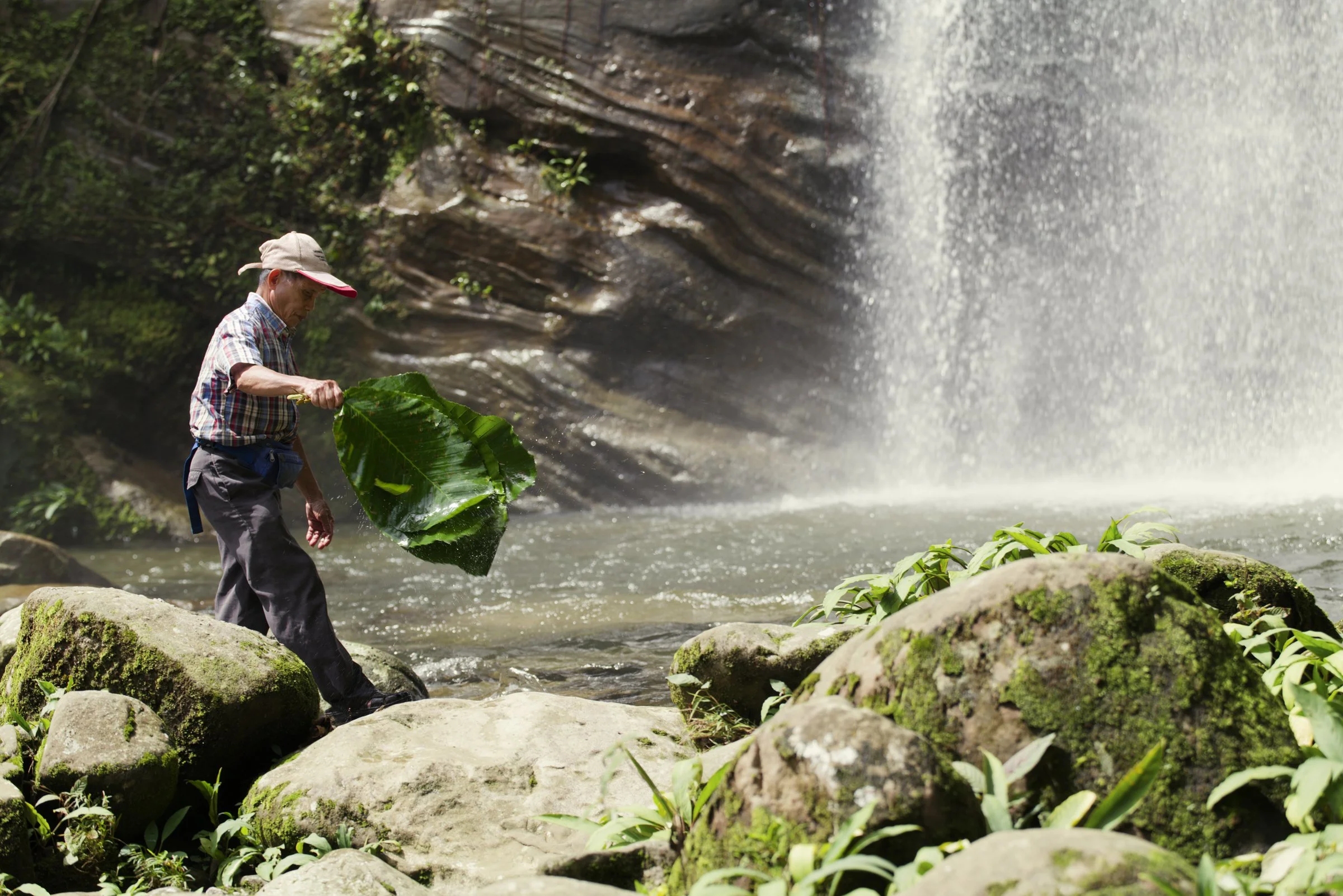
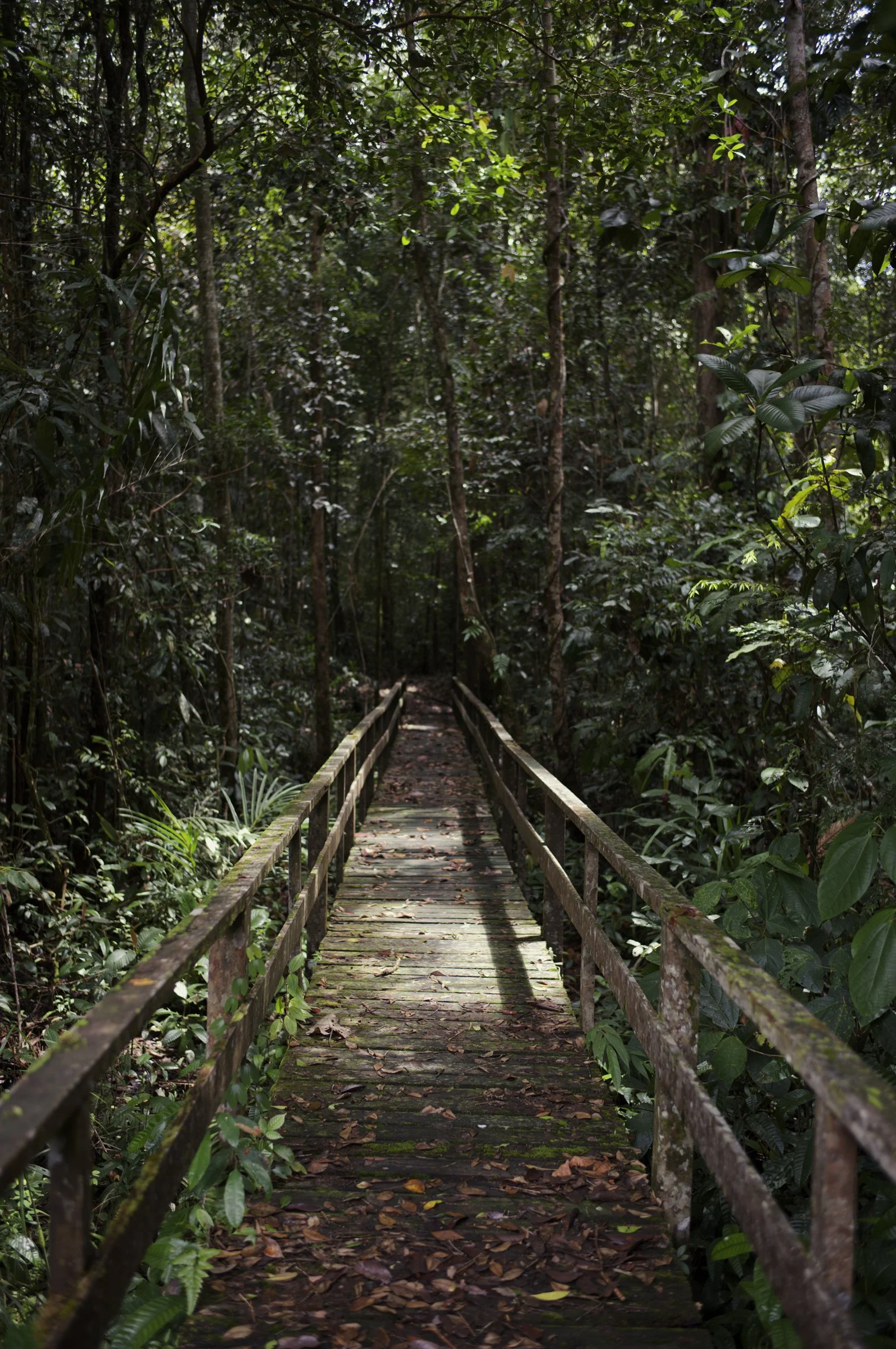
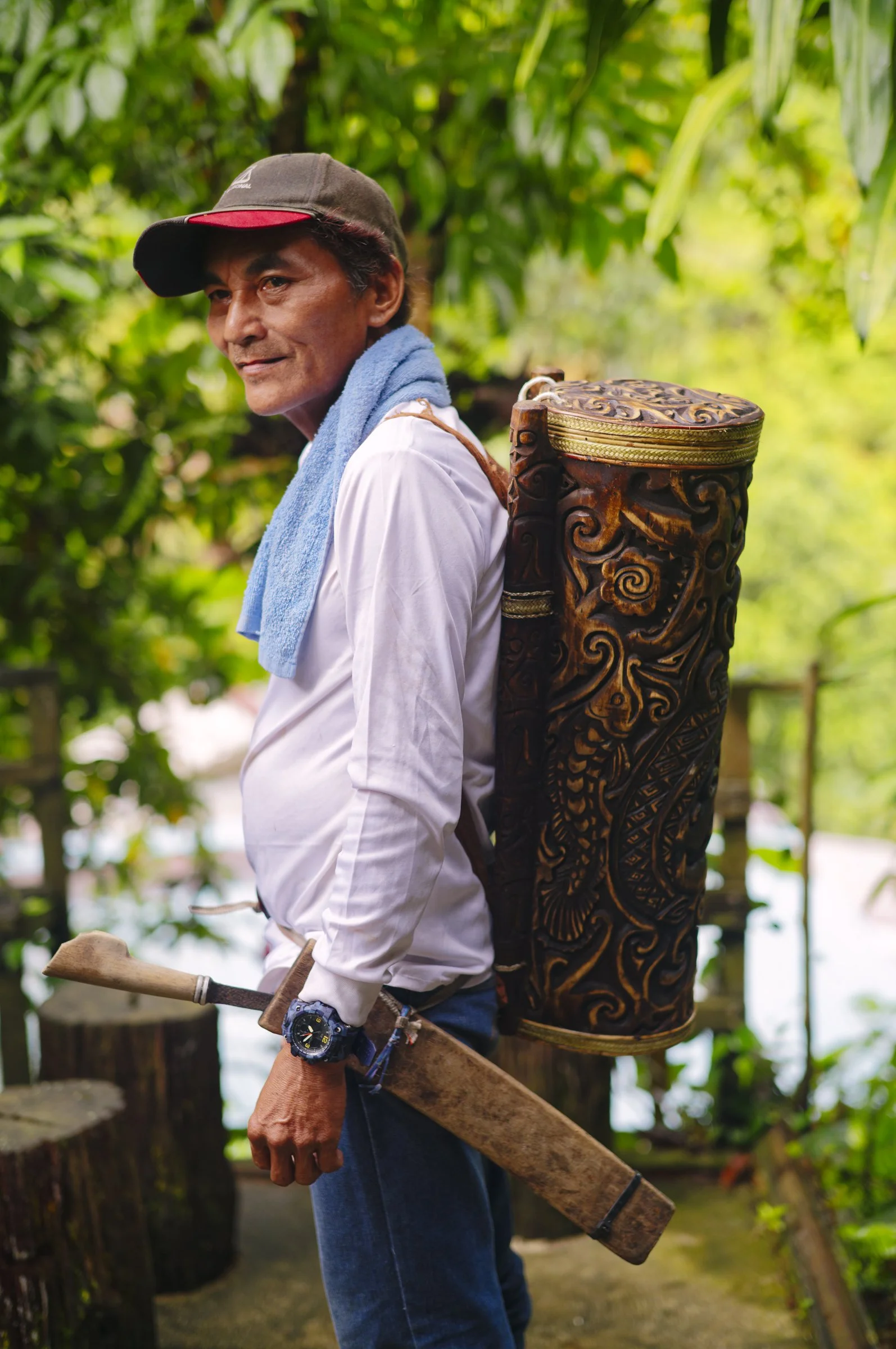
I spent the next two days walking in the fern-filled jungle with a Bidayuh guide William, eating delicacies like hand-picked banana blossom, swimming under waterfalls and peeling off leeches. Back at my base, Saloma Villagestay, I have time to reflect on my Sarawak trip. How marvellous it is that the comics I enjoyed as a child, the adventures with pirates and primates, happened here. I feel fortunate to have followed the paths forged by people I admire, who showed me the wonders of the island, its people, cuisine, culture and wildlife.
And how bizarre to realise that the ink art I wear, forever under my skin, was inspired by this land. Without me knowing, it was Borneo that called to me, as it always will.